Officially, he was supposed to have been killed off by a mob after the Sanhedrin condemned him for blasphmy in about 34 AD. He was thus the first Christian martyr. Because of that, he seems to have gotten mixed up in the ancient legend of Herod and the Cock, which has Herod the Great being informed that a greater king than Herod himself has been born in Bethlehem, and, like all despots when receiving bad news, Herod responds badly.
In a medieval English carol I am fond of, Stephen appears as a waiter in Herod's hall carrying in a roasted boar's head, and when he sees the star over Bethlehem, dramatically quits his job and gives the King the bad news, as follows:
He cast adown the boar's head,
And went into the halle;
"I forsake thee, king Herod,
And thy werkes alle.
"I forsake thee, king Herod,
And thine werkes alle,
There is a child in Bethlem borne,
Is better than we alle."
Herod at first mocks Stephen thinking him mad, and then says that such a thing can no more be possible than for the chicken on his plate to come to life and crow, which, of course, it immediately did.
Herod take this very ill and has Stephen taken out and stoned to death.
Another Stephen, St. Stephen of Hungary, was a pagan nobleman who murdered a rival by gouging out his eyes and pouring molten lead into his ears. After this Stephen converted to Christianity, he required of Hungarians that they too become Christians, and, evidently being being impressed by the cautionary example of the rival, the Hungarian people did so.
"St. Stephen," whoever he was, is (or has been at various times) the patron saint of bricklayers, stonemasons, headaches, horses, and is now associated with gift-giving, at least in English speaking countries.
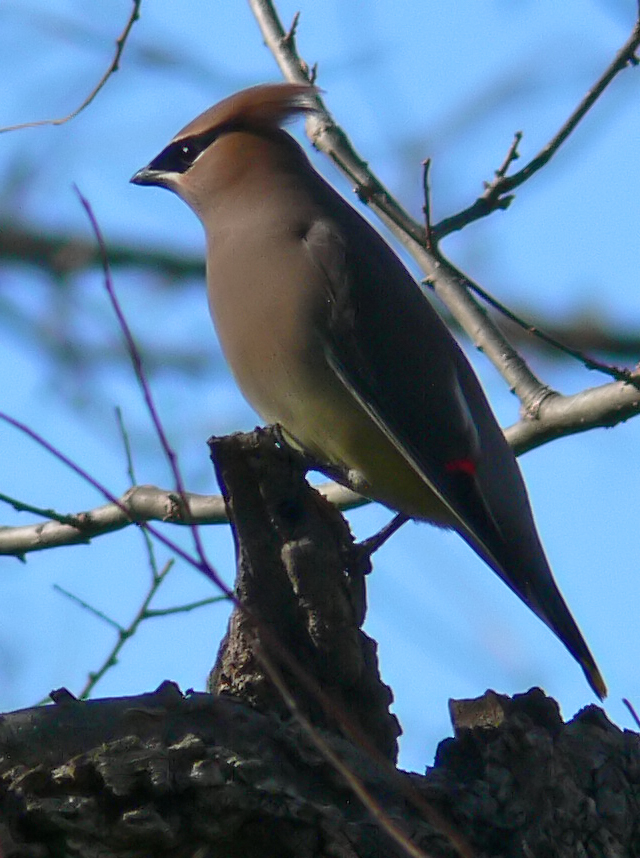
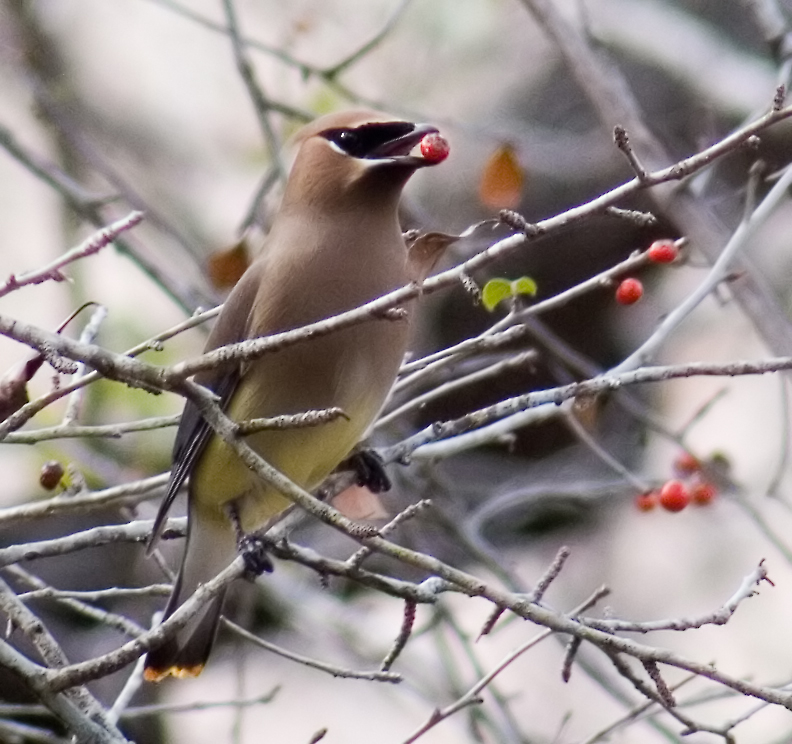
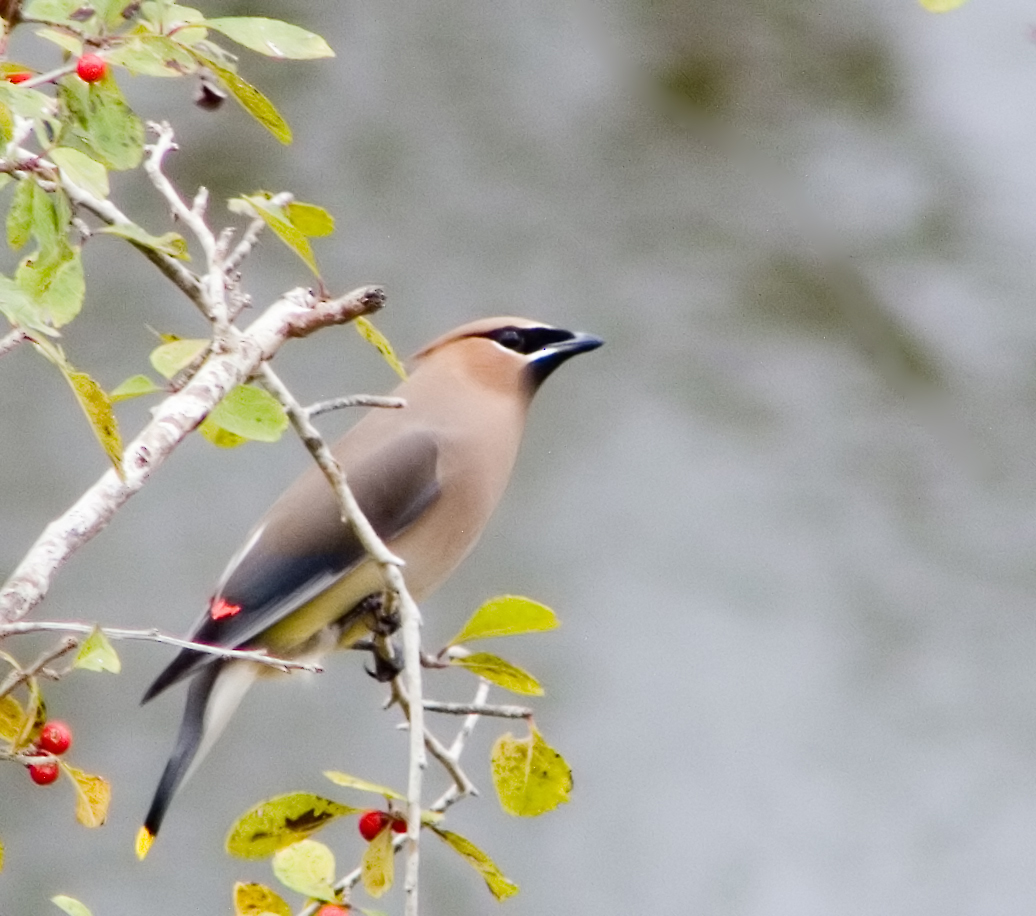
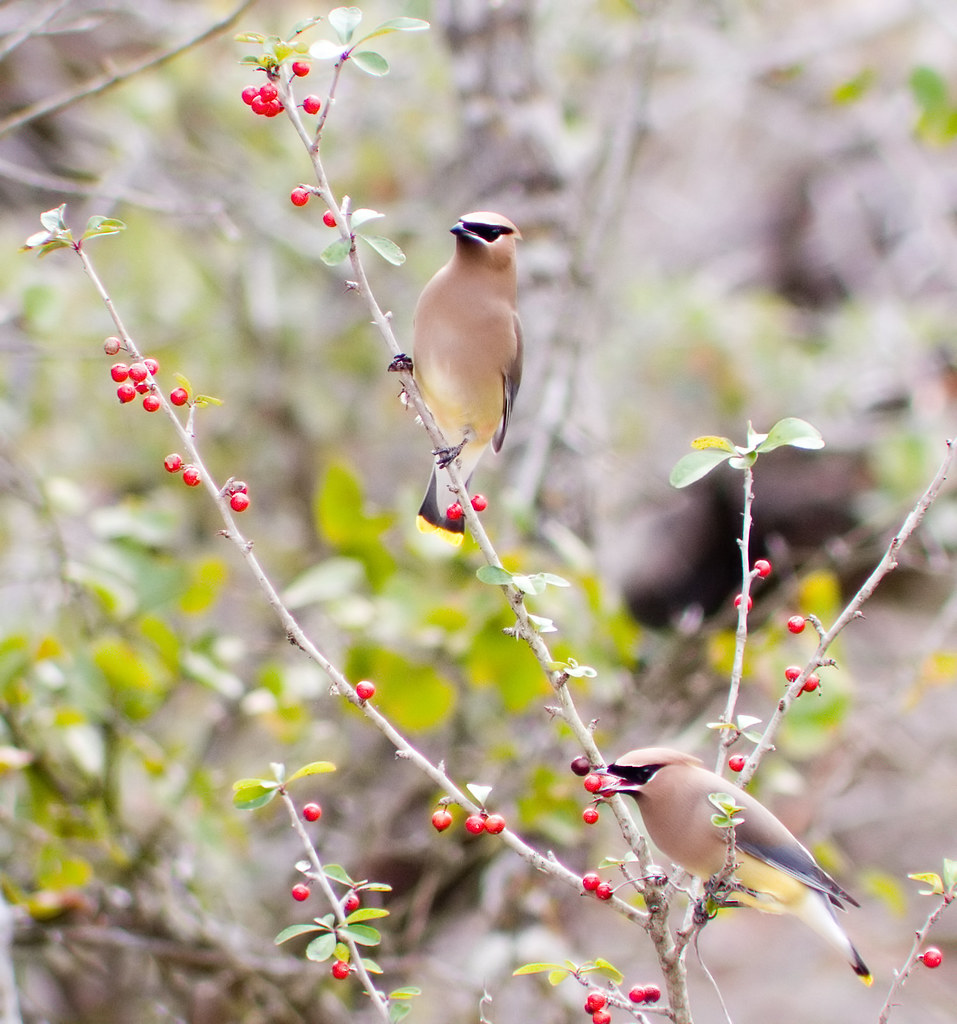
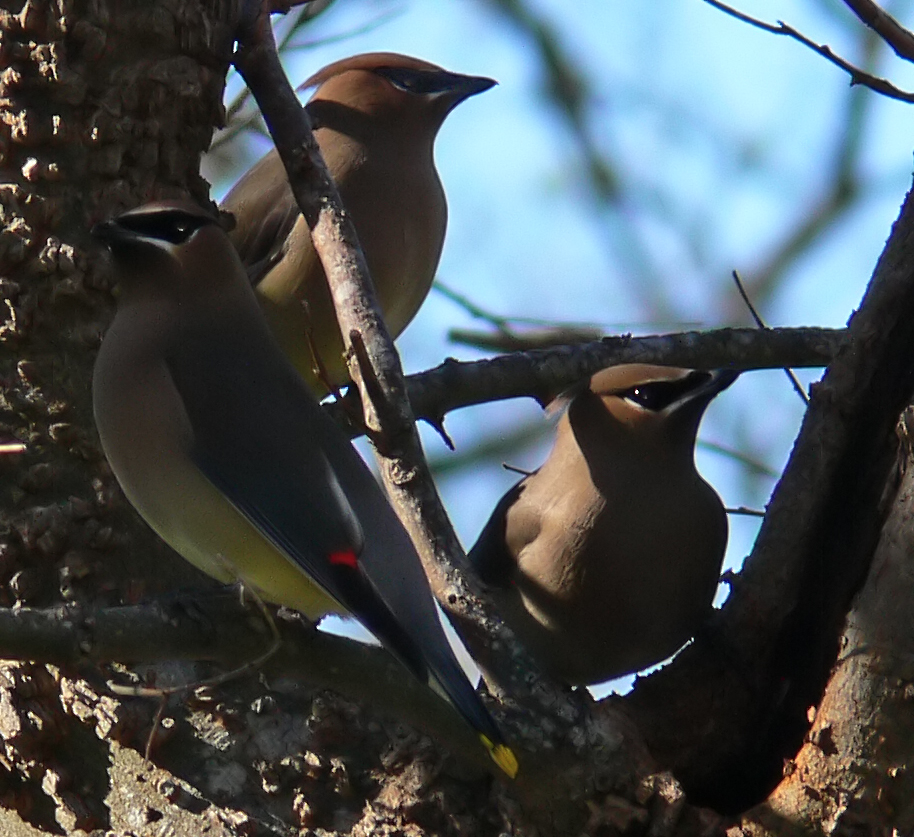
So, since St. Stephen is also associated with the wren for reasons that are very unclear, I went out birdwatching today, and saw some more cedar waxwings. This seems to be a good year for cedar waxwings in Austin. Some years I hardly see them at all.
It was a beautiful day in Austin, by the way. No wrens, however.
Couple of waxwing photos below:
Three waxwings in a hackberry tree
Waxwing on a broken branch