Friday, January 26, 2007

Friday cat blogging

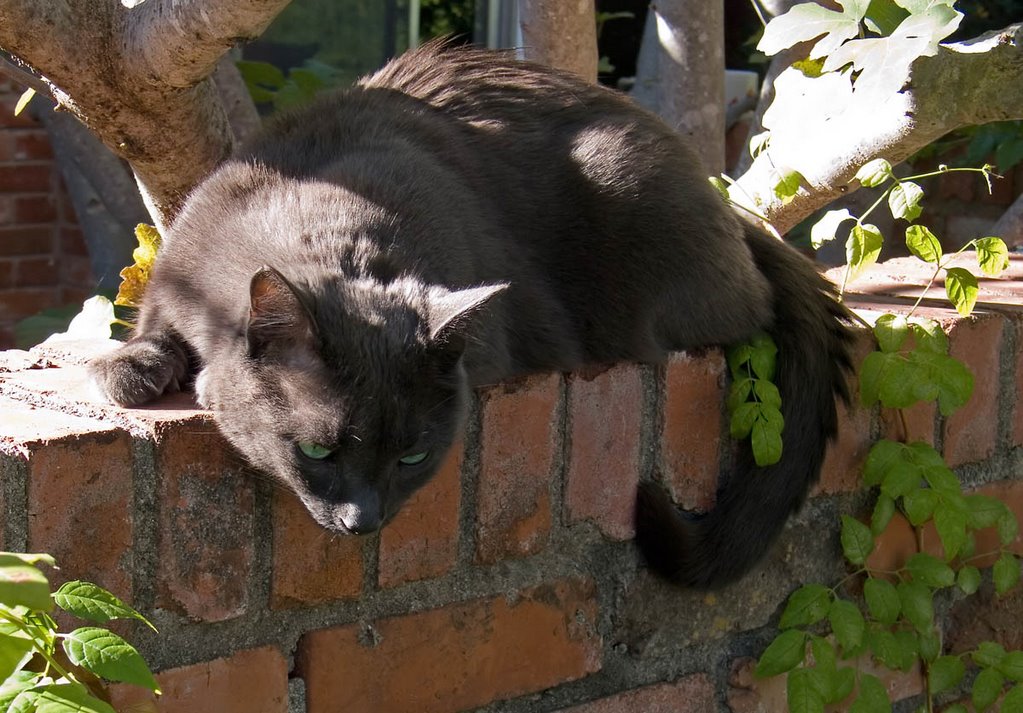
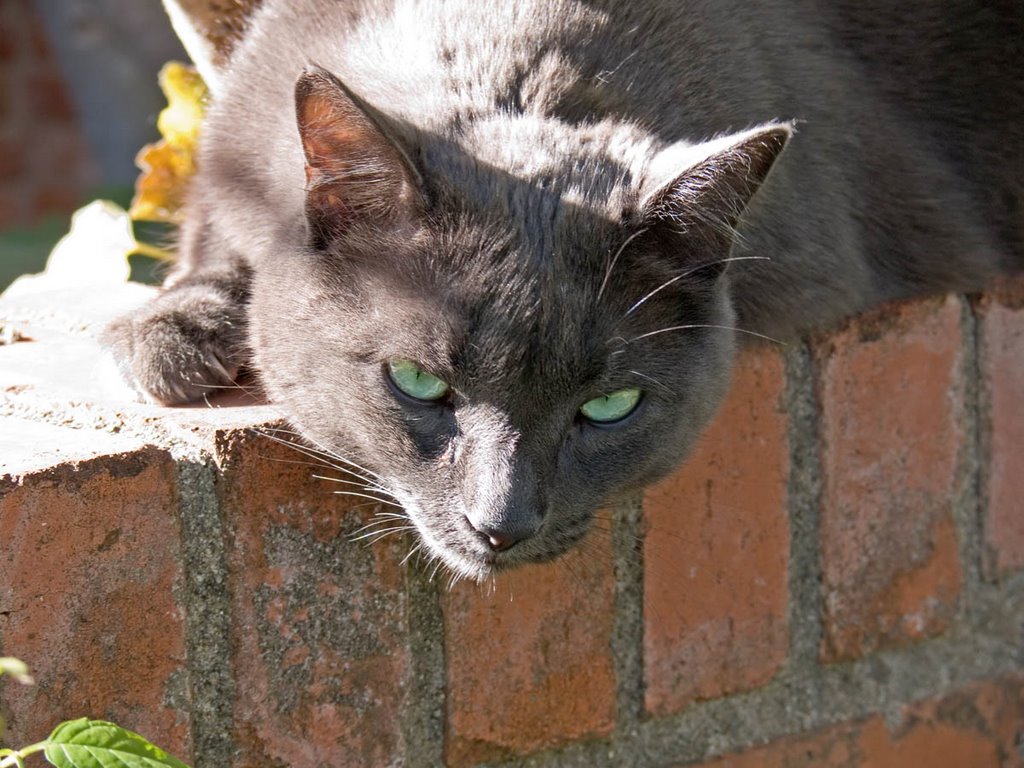
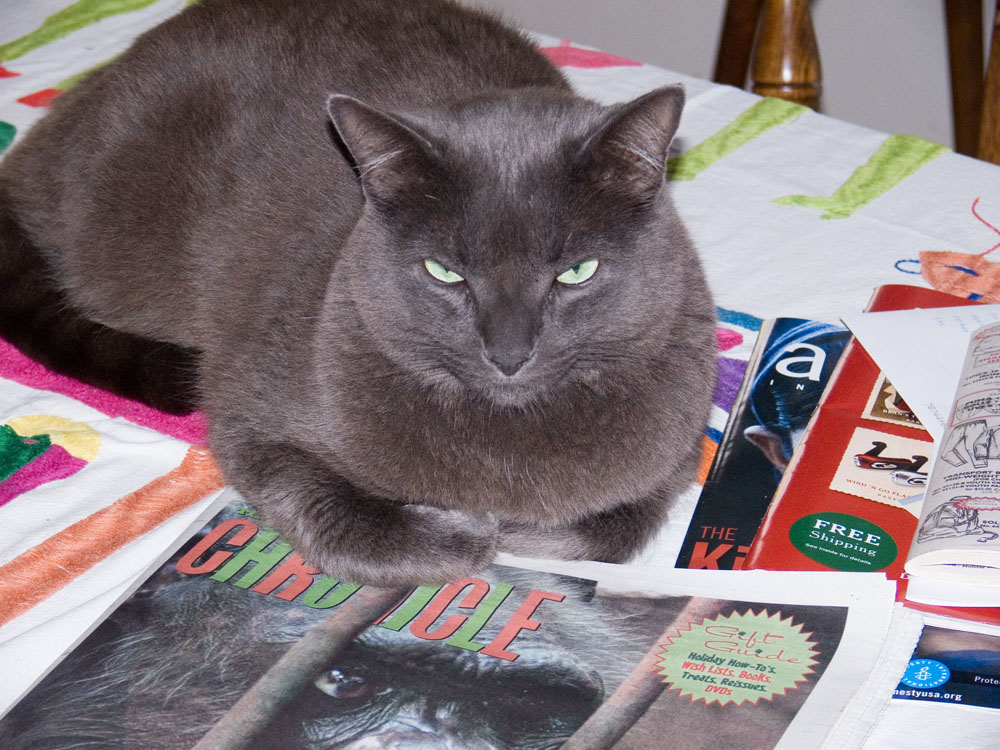
Gray opens one eye to see what is going on.


plus Friday zoo blogging available
here.

Friday, January 19, 2007

I haven't been out much...

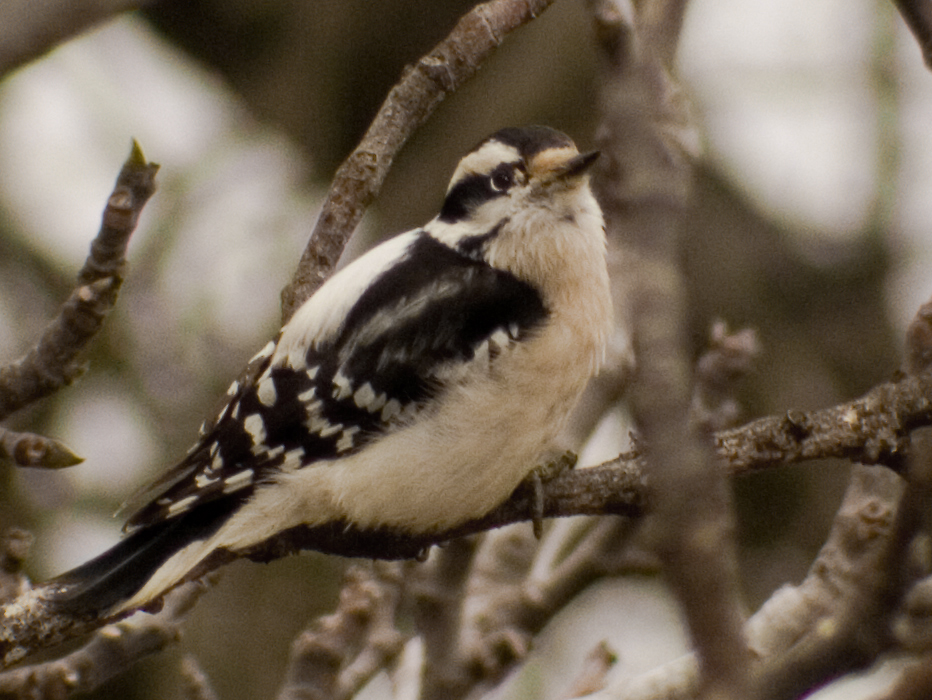
...because of several days of rain followed by an ice storm. It is still cold (for Austin) and muddy--not good for trekking around outdoors. But I have been keeping my bird feeder filled, and the birds come to me. This bird, a downy woodpecker, is not at the bird feeder but is busy investigating my fig tree, which, no longer encased in ice, kept the bird interested for 15 minutes, which must be a week in downy woodpecker time. I think the ice may have split the bark to reveal some food source--in any case I don't recall seeing a woodpecker in the fig tree before.

Downy woodpecker
Downy woodpecker

click for larger view

Wednesday, January 17, 2007

Obsolete travel notes--Honduras before the Hurricane, part 2

Another in my obsolete travel notes series. Travel accounts tend to become out of date quickly, but I have found that I actually prefer travel writing that has arrived at great obsolescence, and describes places that you will never see, or that cannot be seen anymore by anyone, the past being a country difficult of access, to borrow the cliche. I usually take notes when I travel, but only write up a narrative years later, when I can sort out what part of what I saw has fallen away from the commonplace world as I know it, as--ideally at least--some of it may have done.


The Mainland
Bustling, raw and ugly, San Pedro Sula looked like global-economy hell. If you took Odessa, Texas, tripled the population, narrowed the streets and filled them with a few thousand badly tuned used school buses, and allowed only whimsical garbage pick-up for six months, you would have something like the same civic charm. But there was a certain prosperity. It had the raw vigor of rich and unscrupulous people on the move and poor but industrious people trying not to go under.

We had gotten off the plane from Roatan Island, where we had spent Christmas. (Honduras before the Hurricane, part 1) It was still Christmas in mainland Honduras, actually--Christmas in Latin America continues until January 6th. We had to spend a day in San Pedro Sula to await our baggage, which did not return with us on the plane from the island, for unknown karmic reasons. So we ate at the Hotel Skandia lunch counter. Prosperous, possibly wealthy, Hondurans, dressed rather elegantly, were passing the time there, leisurely, a no-hurry latin concept of lunch settling out of the otherwise get-rich-quick capitalism atmosphere for two hours in the middle of the day.

We walked around seeing the sights, and went into the cathedral. It had been built in the 1950's, but looked much older. Inside, they had erected a festive fifty-foot thatch Christmas tree over a framework of iron, behind the main altar, and installed a creche below it. A few faithful, on Tuesday in the morning, knelt praying. One man, in front of a big crucifix in a side chapel, had his eyes closed and his hand on the life-sized-Jesus' bare thigh. The man's family knelt around in a semicircle, all of them praying. Had we thought, we would have prayed for our safety on our bus rides.

Busride to Copan. Mostly local passengers, but a few tourists. A thuggish-looking German let Eve use his large, sharp, hair-trigger switch-blade knife to peel her apple. His girlfriend was very delicate and beautiful. Both carried enormous packs on to the bus, and heaved them in a big stack in the back, where the space was contested by men carrying bushels of fruits and vegetables bought in the market in San Pedro Sula to their fruitstand in Copan. One of the market guys conversed with Kay about his life's ambition to go the US to work and earn enough money to buy a used Toyota pickup and come home with it so he wouldn't have to ride the bus every morning with his day's inventory, competing for space with more frivolous travelers. Let us hope that by now he has achieved his goal.

The forest along the road as we went upcountry had mostly been cut down for agricultural purposes, just as it had been in Mayan times, but now, as then, they left occasional huge whitebarked trees in the fields. One kind was called Ceiba, another kind I can no longer find the name for. The reason for leaving these trees uncut in the field is said to be religious.

The bus ride was long, and as we settled in and started to doze off, "Bang! WHOCKAwhockawhacka!" Everybody woke up. The bus was tilting and careening back and forth across the road as it slowed down. Blowout. The bus finally weaved to a stop. The bus crew, 2 men and 2 boys, jumped out and changed the tire in ten minutes. The driver displayed his impatience by taking off his sunglasses.

Town of Ruinas de Copán (formerly San Jose de Copán) is on a low hill overlooking the river that flows past the archeological site. The Mayan site is a quarter mile upstream. The streets of the town are cobblestoned. The Spanish woman who runs the hotel wanted her 25 Lempiras per person in advance. Cold shower. Cold showers in the tropics are just as cold as anywhere else. We took our laundry to a friendly American woman who lived up the steps (one very vertical street ends in steps) around the corner. She had been living there several years, and seemed to have found a niche for herself. A laundress in Ruins of Copán. What strange lives you encounter, when you travel.

Copán. The guides attaching themselves to shoals of wandering tourists were somehow central to the odd theme park atmosphere, making it a little hard to imagine the human sacrifice narrative they were promoting, even if the big stones sitting like giant turtles in front of the pyramids and statues were indeed used to spread-eagle sacrificial victims to cut their hearts out with flint knives. We were walking around in a pleasant, well-mowed archeological park with little boys selling replica figurines all around us. Big stacks of stone skulls, however, looked ominous even in their present setting. Was the discoloration of the stone altars blood, or weathering, or something painted for touristic purposes? The Mayans did practice human sacrifice, but generally only of captured kings or generals. Think Saddam Hussein and his men, for a modern analog.

The second and third squares of the park were less restored than the first, and free of roving guides. The stonecarving looked to me like something Chinese.

We walked to the river. We found some Germans camped there; the German guys had gone into town to get supplies and drinking water, leaving a statuesque young woman who was unselfconsciously wearing a tiny bikini and tending a fire. Campesinos hoed weeds in a nearby field and ogled her, as were two guys covered with mud, squatting in their underwear digging clay in the riverbank to make the Mayan replicas to sell to tourists. A bunch of girls on the opposite cliff, dressed very conservatively, giggled as they looked down at the young German woman.

Bus to Gracias. A woman paid the bus driver an egg for a ride of a few miles.
Castor beans grew commonly along the roadsides; I never got around to asking why. Purple morning glories twined along the fences. Poplars shimmered along dry creeks. Tall white daisies, high as sunflowers, clustered along the road. We saw an occasional spectacular orange-flowered tree that I found out, by inquiry, was called llama del bosque, "flame of the forest." That was the name of a restaurant we had eaten at in Copán.

We passed a town called Flores, meaning Flowers, on the dirt road stretch of highway on the way from Santa Rosa de Copán to Gracias. Flores was a nice-looking town, except for the town square, which was not only barren of flowers, but barren of almost anything. No vegetation, statuary, or benches--nada. Flowers everywhere but here.

In Gracias, we ran into a Dutch woman ("La Olandesa") who was friendly and told us about the town. She later took us to some hot springs. She had come to her little town as part of some Peace-Corps-like program, and then she stayed on after the program ended, as a restaurant owner, daredevil jeep driver, and "women's advocate" (her words). She was full of smiles, spoke Spanish and English, in addition to her native Dutch, and had a cheerful female Honduran sidekick who seemed to be a sort of partner in the restaurant and the women's advocacy. Both women had buck teeth and intelligent faces. La Olandesa was very social, and a crowd gathered in the evening at her restaurant, surrounding her with gossip and persiflage. Enjoyable company.

Next day, La Olandesa drove like a madwoman to get us to the hot springs, down a chuckholed, spinal-compression-injury rocky road two or three miles. The hot springs consisted of several rocked-in swimming holes. The water was warm, not hot. Big broadleaf trees shaded the place, and a Flame of the Forest. We stayed there, for an hour or so, floating in the warm water, till the jeep came back. There was a little concession stand, a few Hondurans soaking in the springs. People were rubbing a green clay on their faces to improve the health of their skin, they said.

Cloud forest. We got a ride in the back of a pickup from some guy who took us to the cloud forest--La Olandesa's jeep was now in need of repairs. The clouds were nearly down to the town level. We soon got up above the pueblo, and looked down on the cloudbank bright in the sun that covered the village. From the park entrance we hiked in for an hour and a half, through trees like Colorado with a tropical understory. There was a coffee field by the visitor center. A friendly dried-up and sinewy woman in a plain dress, with two wild skinny dogs loping along ahead of her, came striding up the trail and opened the center (which was really a small, abandoned-looking wooden house) and showed us a map of the park. We walked along the stream, which was pretty and clear. I got a drink out of it, assuming the water was OK, which it was. Three colors of mint grew there, blue, purple, and white, the latter two with a menthol smell. Sycamores grew orange-leaved like fall maples next to the stream, under the pines, along with lots of tropical broadleaf trees. On the walk back, at the level of the park entrance, I noticed a sometimes-tended banana field along the trail, possible belonging to the park attendant.

Oak tree leave shone like metal in the sun.

We didn't have time for a more extended stay, and we had a plane to catch in San Pedro Sula. We took a quick meal in a small restaurant in Gracias with velvet-painted Elvises on the wall, before leaving on the bus. (What's the plural of Elvis--"Elvi," maybe?) Bad Elvi.

The bus back to San Pedro. We had noticed that an assistant usually started a bus driver's engine, then when everything was ready for the great man himself, the bus driver would ascend to his seat, with ceremony, place his sunglasses before his eyes, and ease the bus into gear. A bus driver would no more dream of wearing a seatbelt than a bullfighter would wear kevlar armor. This driver was a burly man with menacing handlebar mustaches, whose driving pressed every advantage, who passed at high speeds on on blind curves and hills. I believed that the guy would someday go out in a blaze of glory. Fortunately he did not do so that day. He got us to San Pedro Sula nearly an hour ahead of schedule. I had been fearful that my failure to pray in the cathedral would cost us dearly, but someone else on board must have prayed enough for all of us.

Friday, January 12, 2007

The magic touch

It is never a good thing to have a president on a mission from God, as we see with Mr. Bush's chutzpotic (I have been waiting for a chance to fuse chutzpah and despotic into a single word, and our President, sadly, gives it to me) unilateral decision to raise the stakes in Iraq. Bush has always been able to brazen his way out of trouble, but the last time it really worked flawlessly for him was the 2000 election, when he gambled that he could take office by simply acting as if he had won. And sure enough, he has been living in the White House ever since.

So at this point I think this habit is hard-wired into his administration. A message from the American people, delivered by the last congressional elections, can't compete with the message of past successful effrontery. He believes, and has believed all along, that magical thinking creates its own magic.

What his magical thinking envisions, and what he may have in fact created, is a situation where the country may be boxed in, and either we have to accept what everyone must regard as catastrophe--in this case, coming home from Iraq with nothing to show for it but 3000 American dead, 650,000 Iraqi dead, plus civil war and anarchy in a failed state we have left behind--or double down, and widen the war to Iran, which is what I think he wants to do, and, unless he is deterred by Congress and the public, what he is probably going to do.

The fact that it seems insane should not make us worry any less. Look at his history. And look at the signs. We have a recently published story--and perhaps it is not just based on rumor--that we have given the Israelis the green light to conduct a nuclear strike on Iranian nuclear facilities. The Israelis have denied any such plans, but of course they have denied for years that they even have nuclear weapons.

We have our raid a couple of days ago on an Iranian consulate. We have ramped-up saber rattling, demanding the Iranians stop supplying the insurgency, and a plan to place more American troops along the Iranian border. (The absurdity of the idea of a largely Sunni insurgency being funded and supplied by Iran is a fine point that will be lost on a public, and possibly on Congressional foreign affairs oversight, where an important committee chair does not even know the difference between Sunni and Shia.) We have aircraft carriers being deployed to the region, and Navy aircraft obviously are not going to help secure the streets of Baghdad. So what are they for?

Allow me a moment of dystopian imagination, here. (Hopefully it will turn out to be as mad as George Bush and all his march-hare neocons.) If his plan is to box us in to a situation we can't retreat from, a military confrontation with Iran certainly fits the bill. Once that spirals out of control, we are committed for another few years--and we certainly don't want to change ruling parties in the middle of a war, do we?--until that war becomes, itself, another disaster, larger and uglier and more dangerous for both our security and our civil liberties even than the Iraq war has been.

I think that's were George Bush imagines his legacy to lie. He thinks that God will pull this thing out of the fire for him, and if it takes a bigger fire for God to consider personally stepping in, well, hey...

Thursday, January 04, 2007

George Will and the minimum wage


George Will, a syndicated--and no doubt highly paid--conservative scold, tells us, in his column today, that raising the minimum wage to something higher than $5.15 an hour is a bad idea. His evidence is that the New Deal prolonged the Great Depression. Well, that's not his only evidence, but that's what he leads with, which indicates the quality of what is to come.

Will, he of the perpetual dyspeptic scowl and tightly buttoned collar (could it be that his mood, if not his conservatism, could be helped by loosening his tie?) goes through the usual litany of falsehood and half-truth to make his case, but it seems scattershot and perfunctory. It's hard to wear what appears to be a Rolex and get too indignant about the laboring classes making too much money. (Well, hard it may be, but his duty is clear. So he manfully sets about it, frown firmly in place, as always.)

Mainly, he says, the poor don't need a higher minimum wage. The poor already make more than the minimum wage, he says. (Six dollars an hour, perhaps? And that because of _state_ minimum wage laws, of which Mr. Will, as it happens, disapproves. Ah, well.)

Having said that the poor don't need higher wages, he then adds triumphantly that most of the workers getting the minimum wage are not poor.

That's true pretty much by definition. If you tried to live by yourself on the minimum wage, you could not pay the rent, much less eat. So you have to live with others. Poverty is defined by the government in terms of households, not individuals. So if you live with one and a half other minimum wage workers, you are above the federal poverty level, which is almost as much of an indictment of the government's definition of poverty as it is of Mr. Will's intellectual integrity.

Other parts of Mr. Will's Heritage press release re-write do not cohere well. For example, he tells us that higher minimum wages will increase high school drop-out rates, luring unwary youths with the promise of easy money. He also tells us that higher wages will increase unemployment.

Now, as it happens, this last factoid has been shown in to be untrue in the aggregate, but, alas for Mr. Will's thesis, true for one subgroup of workers--part time _student_ workers. In other words, high school students are about the only class of people who find it harder to get work when minimum wages are raised. Mr. Will ignores this fact when claiming, on the word of two un-named "scholars" that school enrollment will drop 2% if we raise the minimum wage 10%.

You can't have it both ways, George.

But, actually, conservative apologists for the stacked deck and the screwing of the poor, regularly do have it both ways, simply because they do not care about the truth or consistency of what they utter or write, any more than about compassion or fairness, much less equality (a word that probably makes Will shudder. Everybody can't have a Rolex, right?)

When I imagine Mr. Will, above, wearing a paper cap and a work-stained apron, instead of his suit and tie, behind the counter of a franchised fast food place, it is not out of ill will or unfriendliness, but as imaginary but nevertheless heartfelt acknowledgment that he, over and above other workers would be, on the basis of his merits alone, one of the two thirds of minimum wage workers who, he says, get a 10% raise inside of year.

The free market, as Mr. Will says, must be given its due.

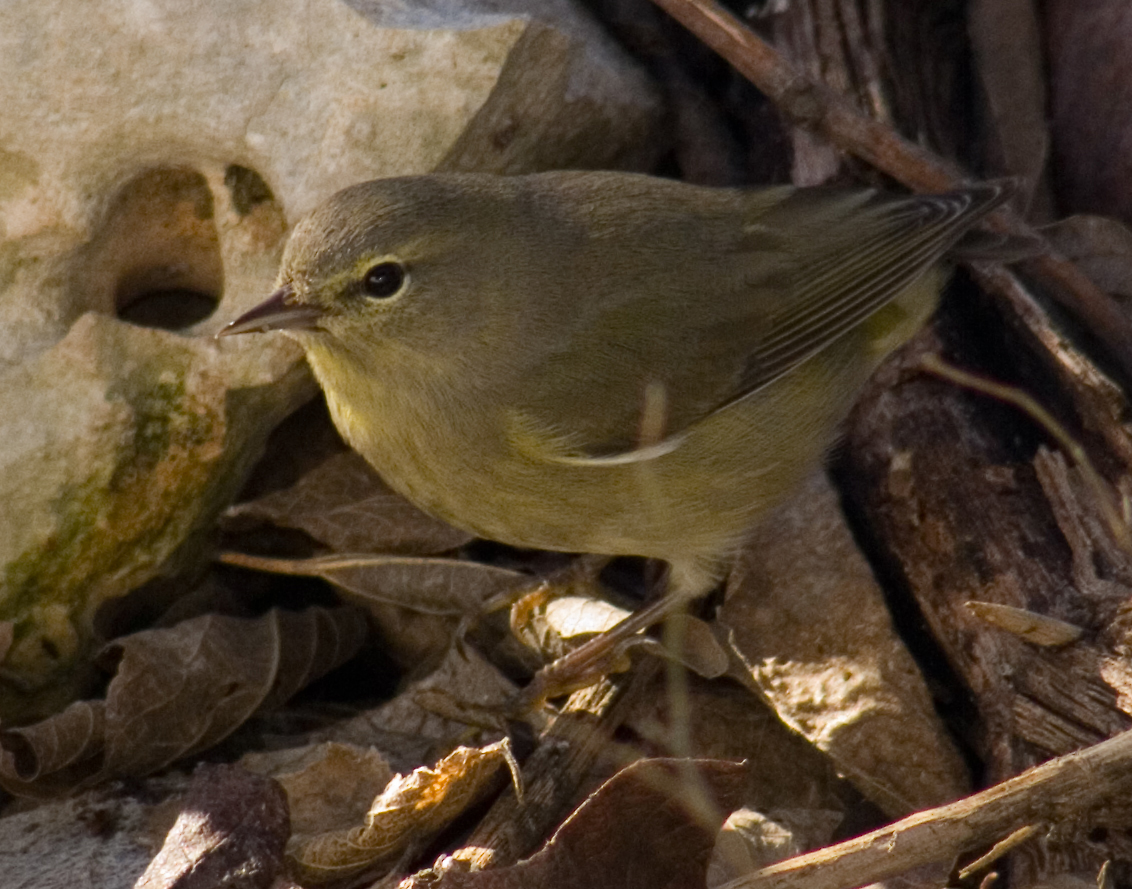
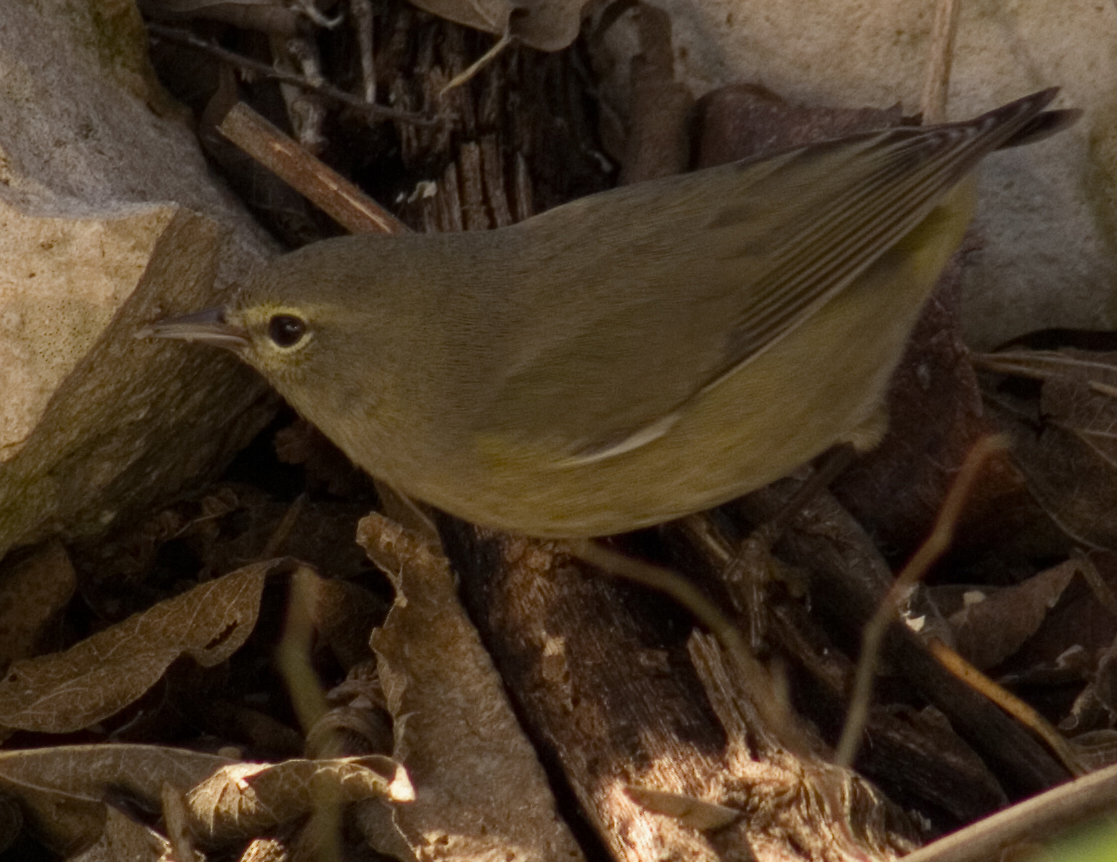
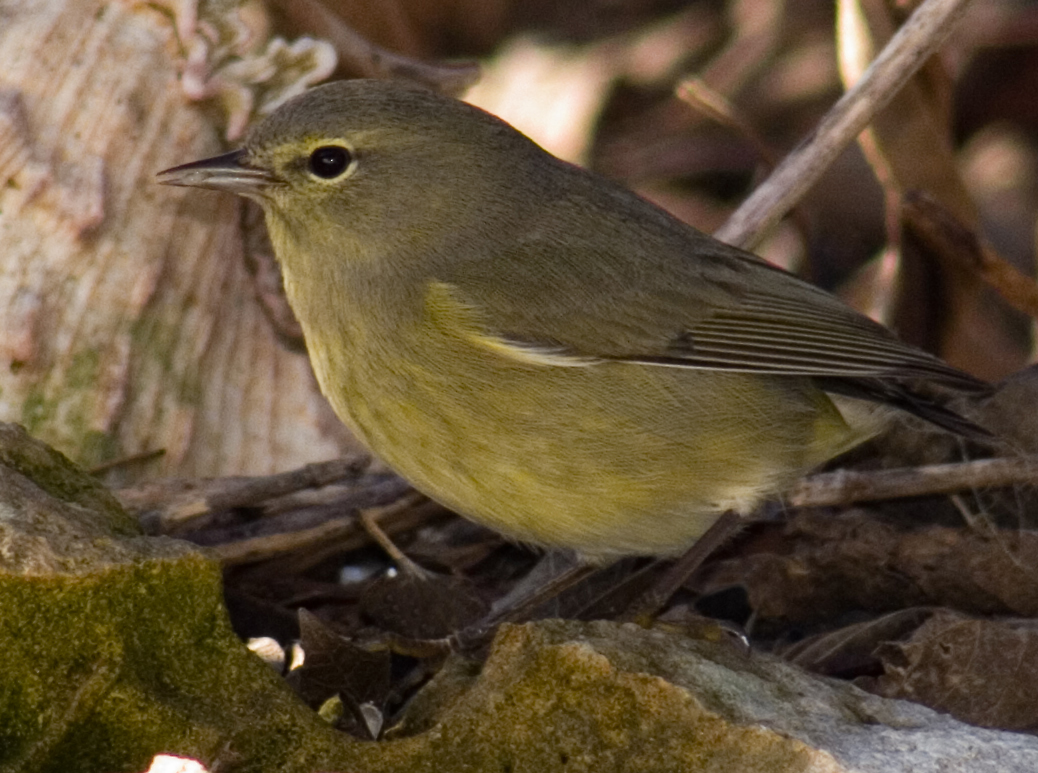
Three views of an orange-crowned warbler

This warbler was rustling in some leaves behind my house. It seemed very busy, and let me get close enough to get some good photos. Although I couldn't tell as I was taking the pictures, it seems to have found a small gelatinous delicacy to eat.

Searching
Orange-crowned warbler 1


It finds something
Orange-crowned warbler 2


...a mid-morning snack
Orange-crowned warbler 3

Tuesday, December 26, 2006

St. Stephen's Day waxwings

Today is St. Stephen's Day, or Boxing day in the British Commonwealth. St. Stephen is both a mythological and a composite figure in Christian lore, because there were several real persons known as St. Stephen, and the some of the deeds attributed to St. Stephen could not have been performed by anyone, most notably being martyred at two different times.

Officially, he was supposed to have been killed off by a mob after the Sanhedrin condemned him for blasphmy in about 34 AD. He was thus the first Christian martyr. Because of that, he seems to have gotten mixed up in the ancient legend of Herod and the Cock, which has Herod the Great being informed that a greater king than Herod himself has been born in Bethlehem, and, like all despots when receiving bad news, Herod responds badly.

In a medieval English carol I am fond of, Stephen appears as a waiter in Herod's hall carrying in a roasted boar's head, and when he sees the star over Bethlehem, dramatically quits his job and gives the King the bad news, as follows:

He cast adown the boar's head,
And went into the halle;
"I forsake thee, king Herod,
And thy werkes alle.
"I forsake thee, king Herod,
And thine werkes alle,
There is a child in Bethlem borne,
Is better than we alle."

Herod at first mocks Stephen thinking him mad, and then says that such a thing can no more be possible than for the chicken on his plate to come to life and crow, which, of course, it immediately did.

Herod take this very ill and has Stephen taken out and stoned to death.

Another Stephen, St. Stephen of Hungary, was a pagan nobleman who murdered a rival by gouging out his eyes and pouring molten lead into his ears. After this Stephen converted to Christianity, he required of Hungarians that they too become Christians, and, evidently being being impressed by the cautionary example of the rival, the Hungarian people did so.

"St. Stephen," whoever he was, is (or has been at various times) the patron saint of bricklayers, stonemasons, headaches, horses, and is now associated with gift-giving, at least in English speaking countries.

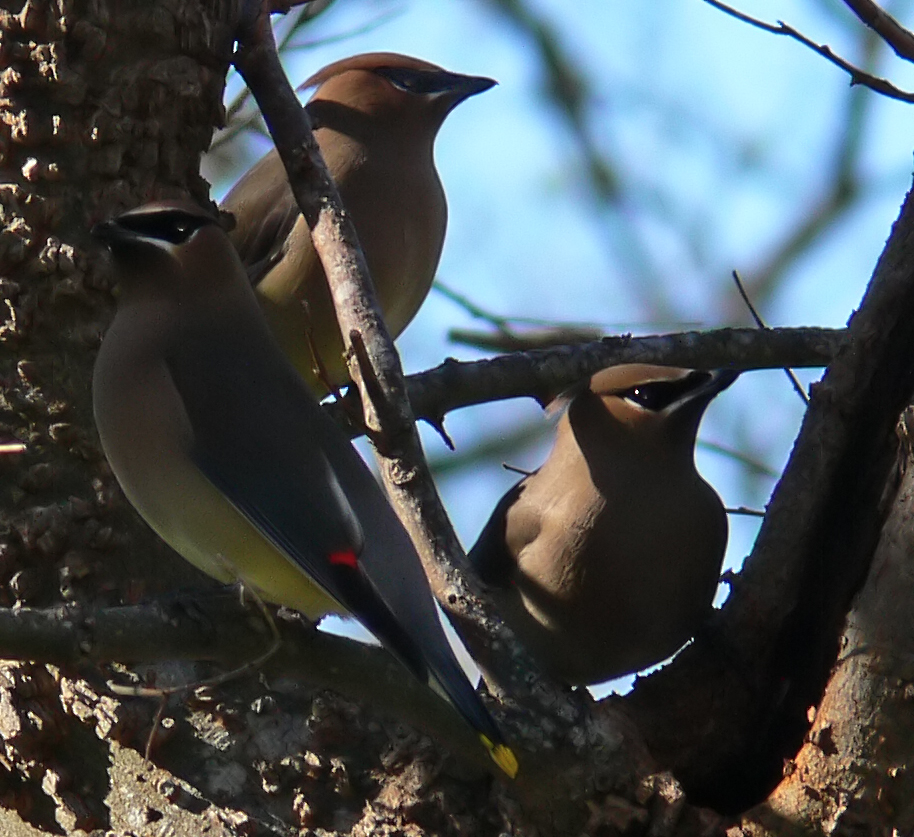
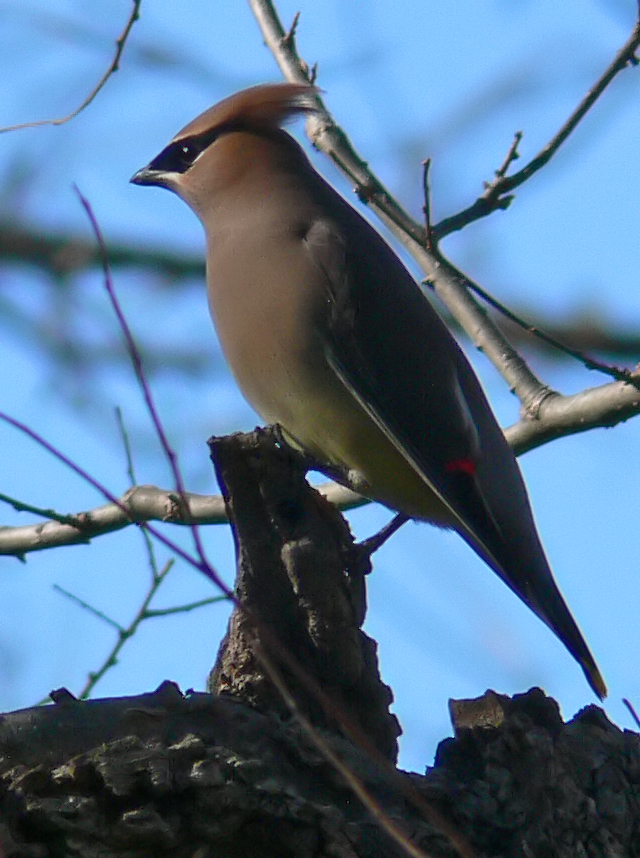
So, since St. Stephen is also associated with the wren for reasons that are very unclear, I went out birdwatching today, and saw some more cedar waxwings. This seems to be a good year for cedar waxwings in Austin. Some years I hardly see them at all.

It was a beautiful day in Austin, by the way. No wrens, however.

Couple of waxwing photos below:

Three waxwings in a hackberry tree
Cedar Waxwings on St. Stephen's Day--photo 4

Waxwing on a broken branch
Cedar Waxwings on St. Stephen's Day--photo 5

Tuesday, December 19, 2006

Note of interest only to people picky about photographs

I have occasionally tried to figure out why my photos on my blog appear washed-out. I had assumed that Blogger was stripping out color profiles, which, if you care about the appearance of, say, an old color photo you have tried to restore, is certainly not a good thing. On the other hand, it's not really a big deal.

I recently began uploading a lot of photos to Flickr, which allows much larger file sizes than Blogspot, and, since I am paying them money for storage (not much, but still...) I was unhappy to find the same problem. So I looked into it. It turns out Flickr does _not_ strip out color profiles, but if you are using a browser that is not color-space aware, the end result is the same--a washed-out photo.

I found this out by trial and error, except in reverse--ongoing error, and then finally, some experimentation.

I am using a Mac, and I normally use Firefox as my browser, which, sadly, does not seem to handle color properly. Otherwise I very much like Firefox. Hopefully Firefox on Windows machines does a better job, but I suspect not.

For Macintosh users, the current version of Safari does handle color correctly at least to the extent of displaying sRGB more or less as intended.

So you Mac people, you should probably use Safari when viewing Photos on Flickr, at least if you want to see them the way the photographer had in mind.

(I can't advise Windows users, of course, having not used a Windows machine since I retired. Hopefully there exists some Windows browser that will handle color decently well, which, minimally, would mean doing something more or less correct with sRGB photos.)

But none of this will make the slightest bit of difference for photos stored on Blogspot, because as far as I can tell, they do, indeed, strip out color profiles.

I recently restored some 1987 photos of a trip to Real de Catorce in Mexico to some semblance of how they originally looked, and put them up on Flickr. If the question of color profiles interests you (or if old Mexican towns interest you) you can try these photos with different browsers. Safari makes a big difference on my Mac.

Thursday, December 14, 2006

Waxwings and winterberries

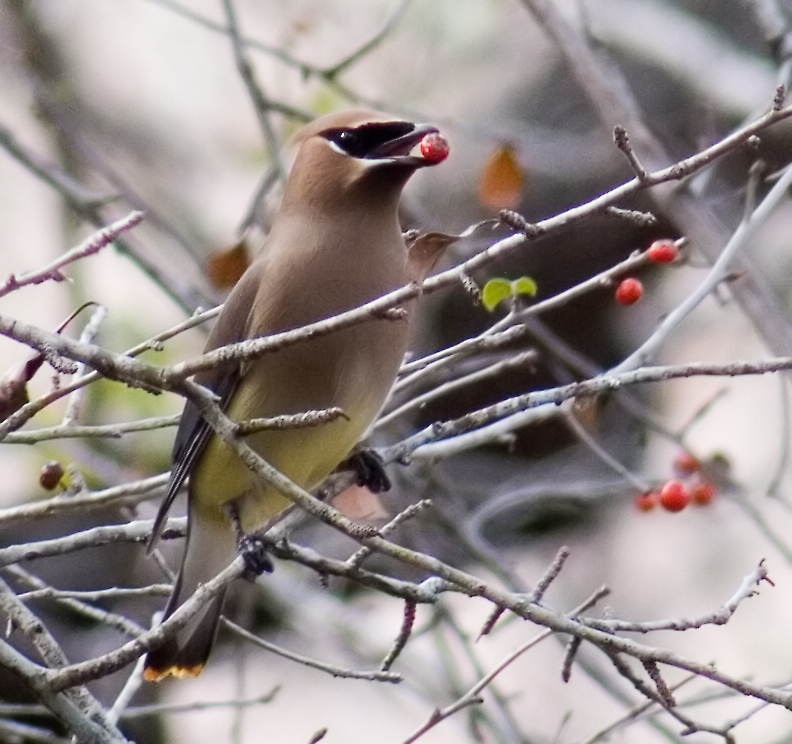
I was birdwatchiing in McKinney Falls state park today, not expecting many birds though, because it was in the middle of the afternoon, not the best time for seeing birds--but as walked along the limestone cliff above Onion Creek I began to hear the faint gargling whistles of a flock of cedar waxwings. I soon found myself surrounded by the whistles, localized in bushes all around me. The birds paid little attention to me. They were busy eating winterberries, which is what the bright red berries of the native deciduous holly (Ilex decidua) are called. The holly plants have all lost their leaves at this time of year, so the berries are easily visible to the birds, and the birds, as it happens, are also easily visible to the camera.

It was actually a mixed flock of waxwings and robins, but they seemed to share the feast amicably, possibly because there seems to be a big crop of berries--plenty for everyone.


Here is a cedar waxwing who has found a winterberry.
Cedar waxwing eating holly berries


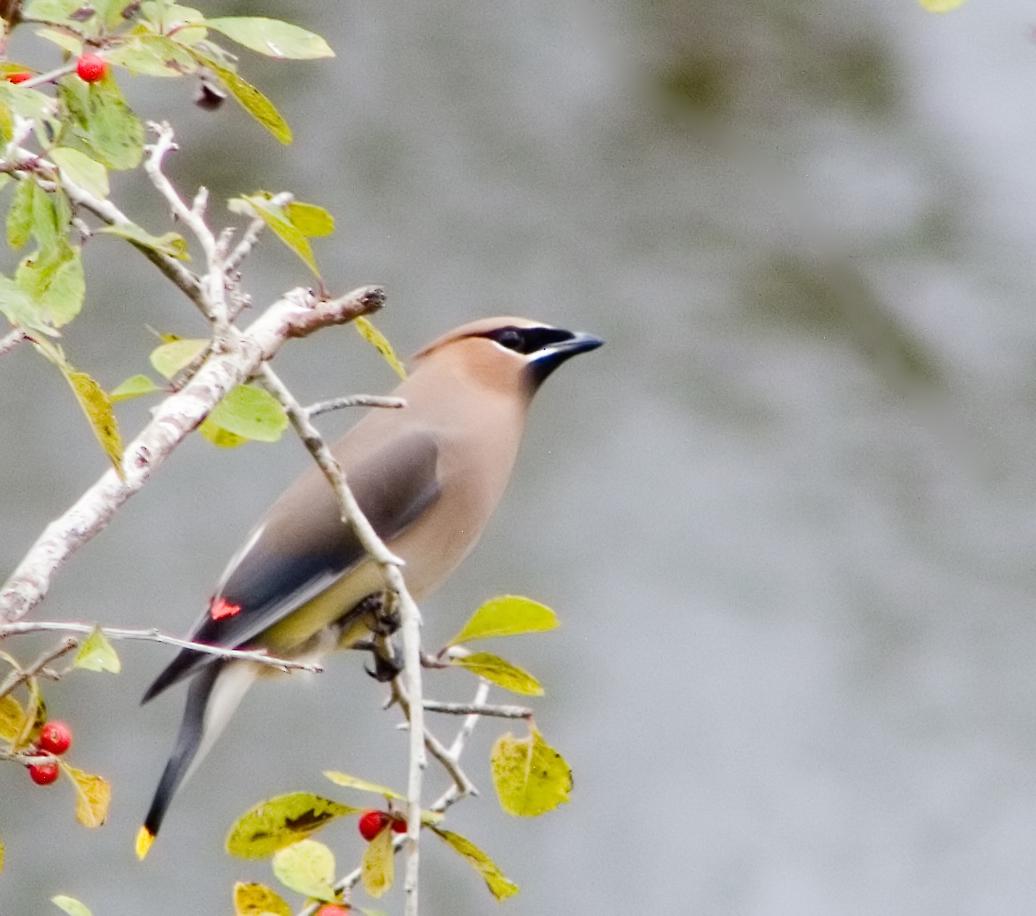
Here is a waxwing looking for more berries
Cedar waxwing looking for holly berries


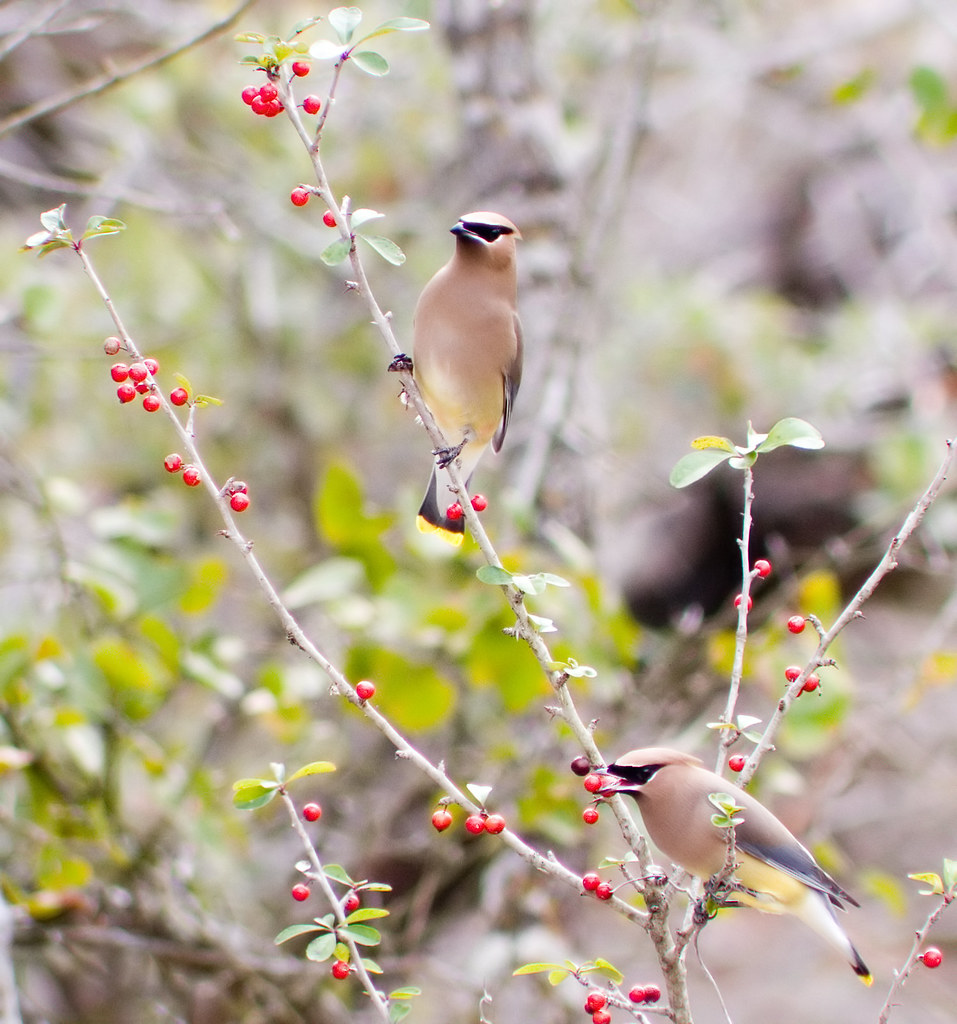
Two waxwings in a holly bush
Two cedar waxwings eating holly berries

(click on any photo for larger versions on my Flickr page.)

Wednesday, December 13, 2006

December insects in Austin

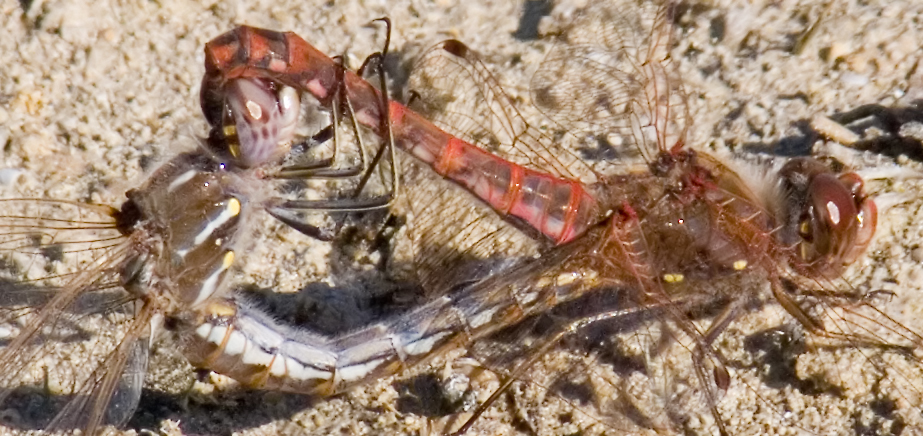
It was another 70° day in Austin, and it brought out some butterflies and a few dragonflies. The dragonflies were taking the opportunity to mate. Dragonfly sex is weird (though perhaps no weirder than anyone else's). The male clasps the female behind the head with hooks at the tip of his abdomen, and the female reaches up with the tip of her abdomen, where she is keeping her eggs, and fertilizes the eggs at the male sex organs at the bottom of his thorax.

Variegated meadowhawks mating


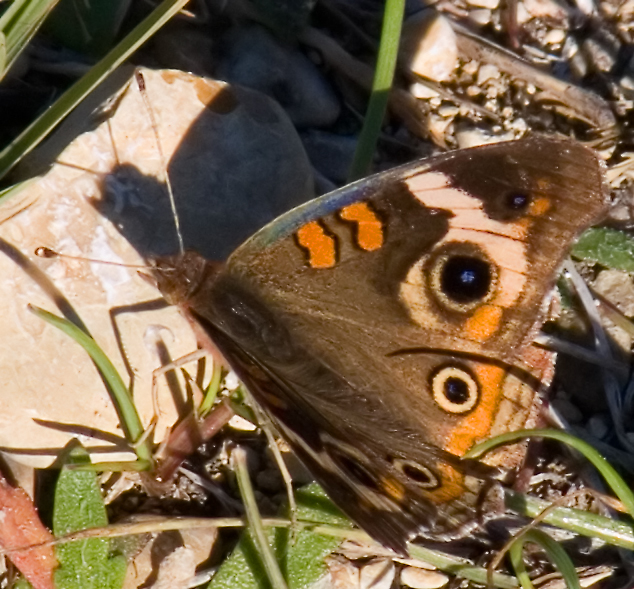
And here is a view of a common buckeye butterfly, active on a warm December day...
Buckeye butterfly on December 13 in Austin

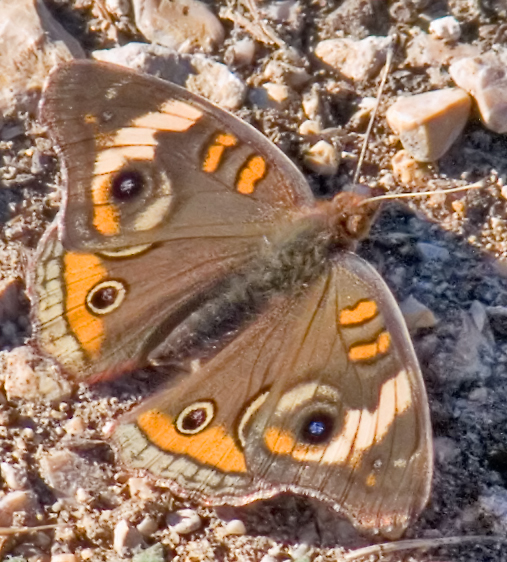
...and here's another
Another view of a December buckeye

click any photo for larger view

Tuesday, December 12, 2006

Town birds at Town Lake

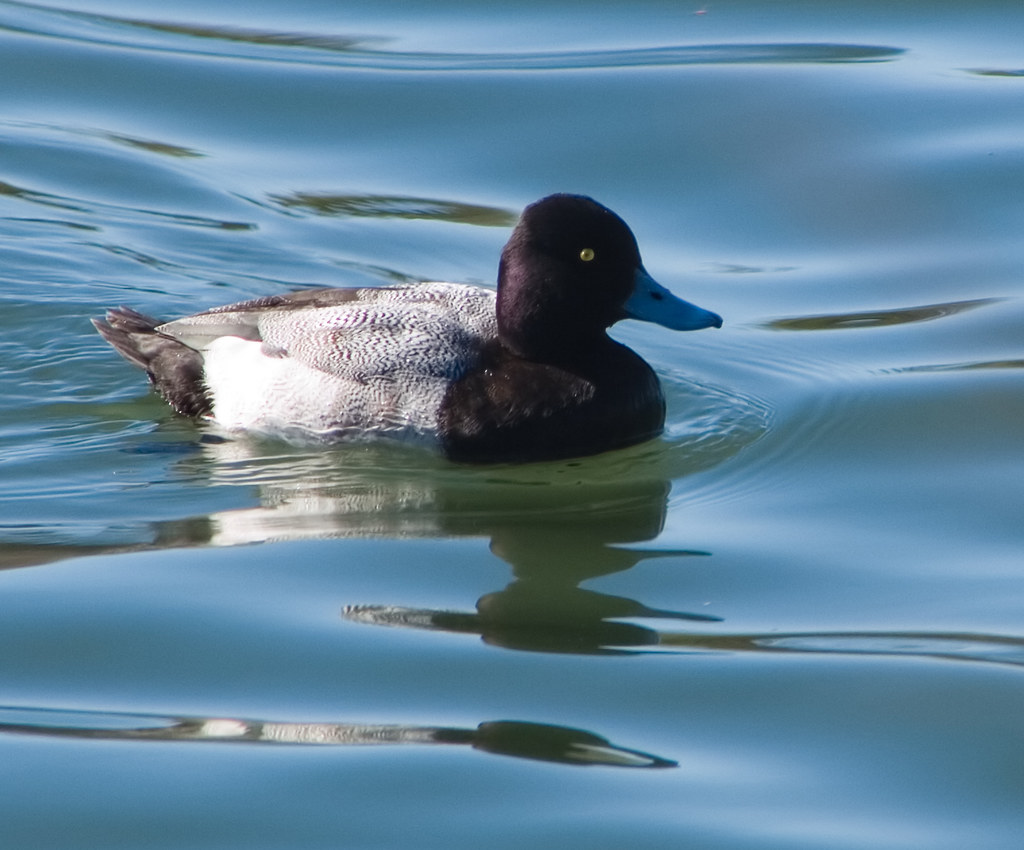
It was a fine, sunny day in Austin, after a spell of cold and damp weather. I went down to Town Lake to see which ducks are back, and found ruddy ducks, buffleheads, and great numbers of lesser scaups.

Having also lately taken an interest in butterfly photography, I noticed that several butterfly species are still out in good numbers, notably American snouts (not nearly as numerous as before the first freeze), buckeyes, and a large yellow Phoebis species, either agarithe or philea. But I had my 1.7x tele-extension lens on because I wanted to take pictures of birds, and this is no good for macro shots.

I thought I had better pictures of the birds than it turns out that I did. Below is the best of the scaup photos.
Lesser scaup, Austin's Town Lake


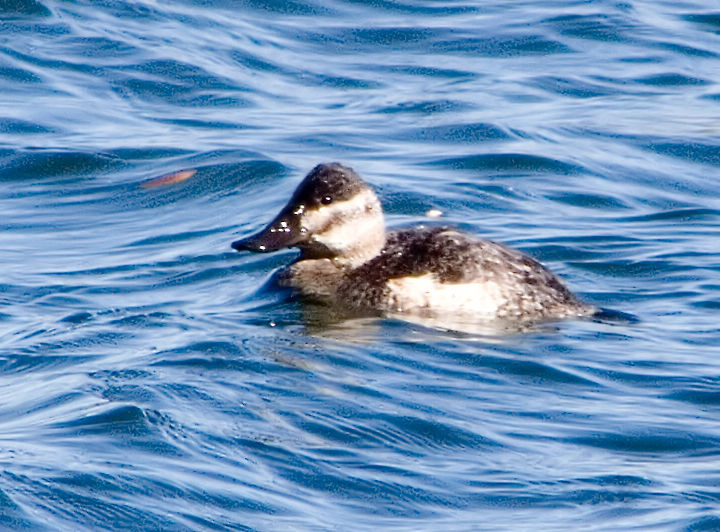
This is a female ruddy duck. More commonly they have their short, stiff tails held almost upright.
Female Ruddy Duck, Austin's Town Lake


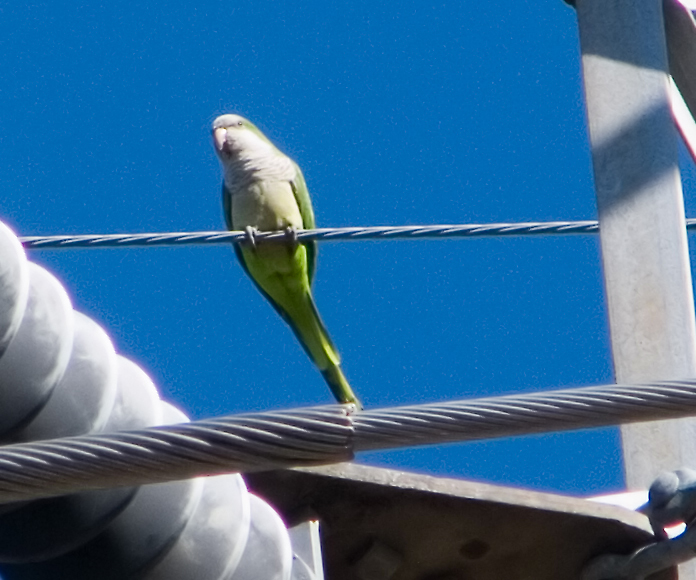
This is one of Austin's monk parakeets. They have lived and bred in Austin for 30 years or more. They are temperate and subtropical birds from South America, and can withstand fairly cold weather. They like power poles.
Monk parakeet in its natural Austin habitat

(click for larger versions of the photos at Flickr.)

Saturday, December 09, 2006

Kay visits a Mexican bordello

subtitle: The follies of youth

In the summer of 1962, Kay Sutherland was on an archeological dig in the desert near Monterrey, Nuevo Leon, in northern Mexico. She was 20 years old and was an anthropology student.

Now, it's not clear whose idea it was, but some of the guys on the crew decided to visit a house of prostitution in Monterrey one Saturday night. Kay, having as usual made herself one of the boys, and being the person she was, wanted to go along, to see what it was like. She said, "why don't I go disguised as a man?" The rest of the crew--perhaps surprisingly--liked this idea.

The "disguise" is shown below. In the photo, they are on their way to the brothel. I don't know where Kay got the fake sideburns. The concept was that Kay would buy a drink and sit silently with a couple of others who were also drinking but not buying the favors of the ladies of the night. Thus Kay, as a good anthropologist, could observe first-hand, or almost first-hand, the culture of Mexican whorehouses. This whole thing was not well thought out, though. Sitting silently was not Kay's strong point, and also, I think she was the only one of the group who spoke Spanish.

Unsurprisingly, their plan went awry. The management took one look at them and raised the prices of drinks astronomically. My guess is that no one was fooled, and that everyone in the place thought the group was a bunch of American college students one of whom was a woman dressed like a man, and that in any case they were not going to be paying customers. Hence, high drink prices would encourage them to leave.

At this point the group had a problem. They had all already bought drinks and they realized with dismay that they did not have enough money to pay for them, which if nothing else indicates to me that my theory--that they were suspected of being a group that was gonna look but not buy--was correct. If they didn't have enough money after collectively pooling their pesos to pay for the drinks, obviously no one had seriously planned on paying for sex. Either that, or someone had been the victim of a pickpocket. (Unfortunately, I don't remember Kay's account of the origin of their financial woes, except that I remember it was complicated.) I am also surprised, looking at the photo, that they were allowed a tab.

But now they had this problem--they owed a debt they couldn't pay to some very tough customers in a very bad part of town. Big paunchy guys wearing black stetson hats and cowboy boots and big silver belt buckles, who seemed to have some employment capacity in the place, were staring at them and not in a friendly way. They decided to get up--nonchalantly--and move toward the door as the tall guy in the photo, who presumably could run the fastest, fumbled with his wallet like he was going to pay la cuenta.

As they got out the door and ran, he, too, bolted. Three of them ran one way and Kay and a guy who was with her ran another way, but Kay was wearing shoes that were too large and didn't fit, and the shoes kept trying to fall off, and she was soon left behind by her companion, so she was now all by herself running in a blind panic with floppy clown shoes down a dark alley in the red-light district in Monterrey, Mexico, trying to escape from pursuers she imagined wanted to beat the hell out of the skinny and pasty-faced boy she still thought they believed she was.

But, as it turns out, no one was actually behind her. No one was chasing any of them. The whorehouse proprietorship had sent no goons in pursuit. But the archeology crew only figured that out later, after they managed to reunite and return, safe and sound, but very late, to where they were staying.

The scrambling escape from the whorehouse must have caused a lot of merriment to onlookers, actually. People must have considered it worth the price of a beer.

Improbable as it may seem from the photo (or the story), several of this group went on in later life to become college professors.

Monday, December 04, 2006

Occasional cultural notes: The Blanton

(I believe my last cultural note was a review of a vast hunting-supply and outdoorsperson supermarket a few miles south of Austin, hard by Interstate Hwy 35. You get what you pay for, at this blog.)

I have twice visited the new Blanton Art museum of the University of Texas at Austin, which has been built a little behind schedule after Swiss architects Jacques Herzog and Pierre de Meuron abandoned the project in a world-class dudgeon, as befits architects of their station, after the UT System Board of Regents nixed their original plan, which looked like an enormous plastic and glass tent (which by the way I kind of liked) saying it was not in keeping with University's Master Plan, which stipulates that all new campus buildings should conform to a "Spanish Renaissance" style. And clearly, it was neither Spanish nor renaissancy, not in any way. The new Blanton building, now finished, designed by some Boston architects whose names I forget, is nothing to write home about but does fit well with a lot of other UT buildings, and is indeed handsomer than most of them, in my opinion.

Downstairs is a big Luca Cambiaso exhibit. Cambiaso was a little-known Genoese Renaissance painter, and this is billed as the first major exhibit of his work anywhere in half a century, and the only one ever put up outside of Italy. I didn't much like his work. Since they won't let you take photos of the first floor exhibits, I can't show you why.

But I found plenty of things to like upstairs, among the permanent exhibits--and you can take pictures, though the light is so bad it is hard to do so. Except for the 20th century stuff, this is all out of copyright, so I think it is OK to put these photos on the web.

Here is a painting of David with the Head of Goliath by Claude Vignon, from about 1620. David here is curiously girlish, and this reminds me of some of the Salome-with-the-head-of-John-the-Baptist paintings I have seen, the ones I can remember being, I believe, Victorian--which leads me to wonder if this weird and obscure painting by Vignon may have somehow been an influence on the Aubrey Beardsley crowd. Probably not.


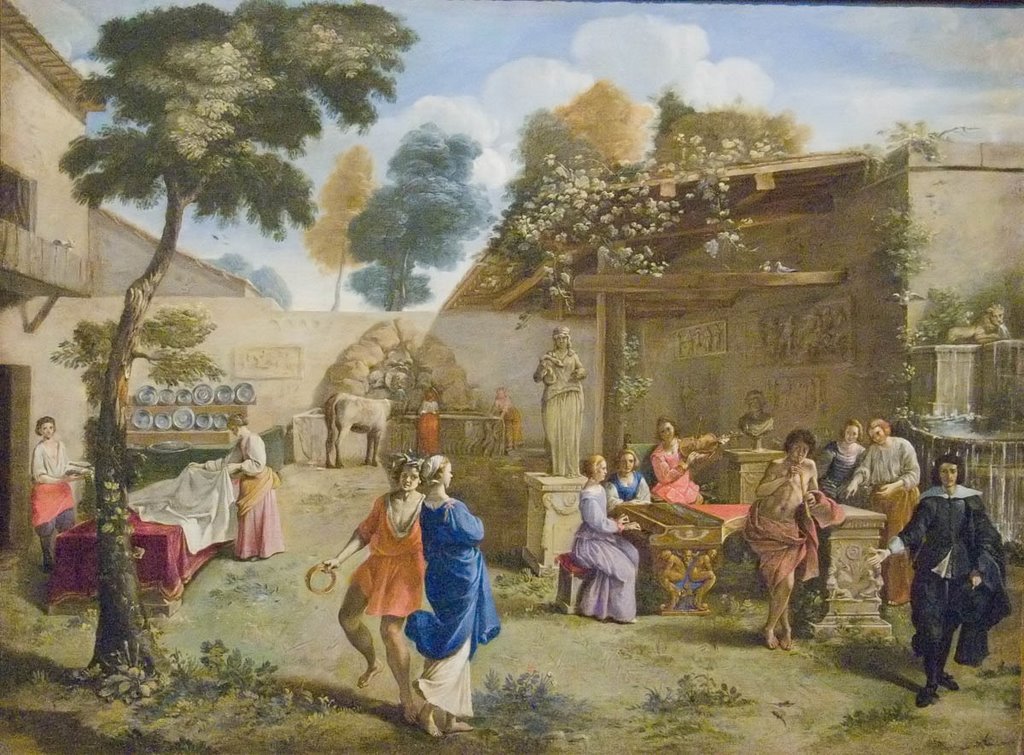
Next is Giovanni Battista Passeri's Musical Party in the Garden, which is a cheerful painting that is hard not to like, or at least I found it so.


Here is one of George Romney's many paintings of Lady Hamilton, and not one of the better ones, but it led me to read a little bit about her--she was quite an extraordinary woman.
She was was born Amy Lyon in 1765, and was the daughter of a blacksmith. Later she changed her name to Emma Hart. She was apparently brilliant as well as beautiful, and eventually became Lady Emma Hamilton. In many ways she was the prototype of the modern celebrity, famous for being, well, famous. And, of course, she was Admiral Nelson's mistress. She was an alcoholic, and, sadly, drank herself to death. (This little caption hardly does justice to her life, which was spectacular. Sorry.)


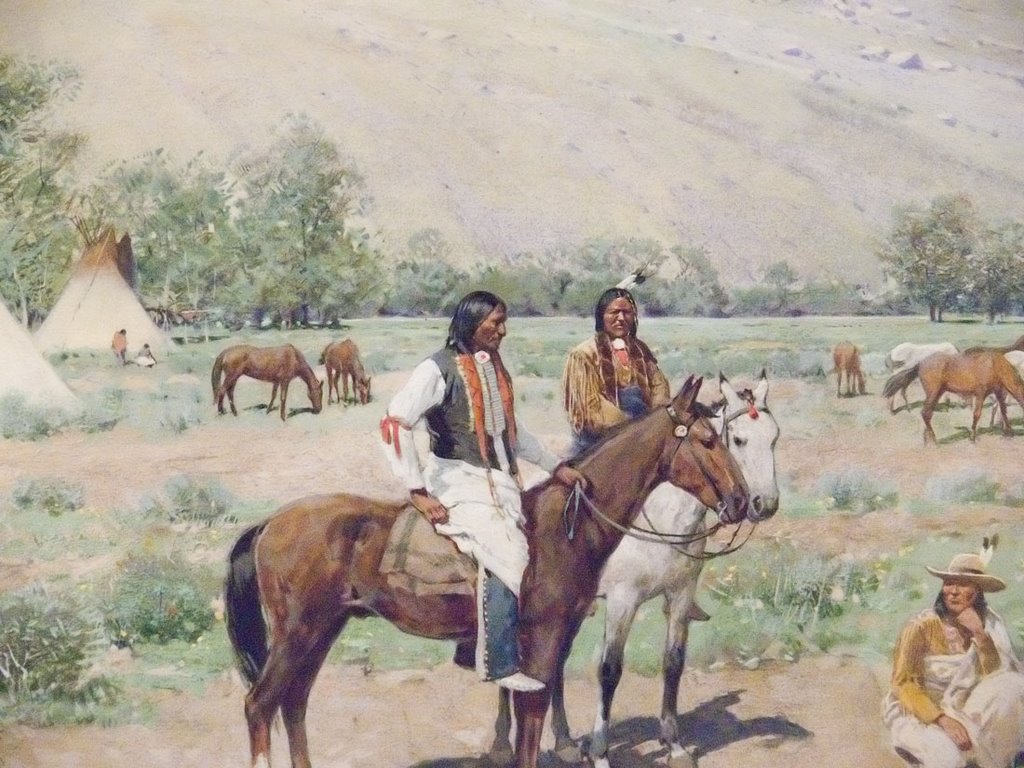
I especially liked the little section of 19th century frontier paintings. Here is a detail of a Henry Farny painting, Council of the Chiefs.


click any photo to enlarge

Thursday, November 30, 2006

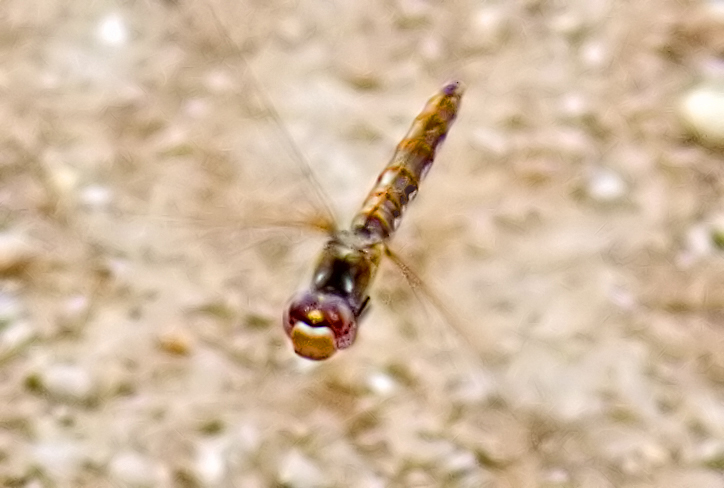
Variegated meadowhawk in flight

Yesterday the temperatures was over 80°F in Austin. Today the temperatures were in the upper 30s all day long. No dragonflies out today. This photo was taken yesterday. If this were a photo of a dragonfly at rest, I would not post it, because it is too blurry. An ideal camera for this photo would have been one which could focus as quickly as my eye, and could take non-grainy photos at very high ISO numbers. I do not have such a camera. But given a necessarily slow shutter speed, and the one shot out of a dozen tries that was almost in focus, it's not a bad picture of a dragonfly in the air.

Wednesday, November 29, 2006

Not so green

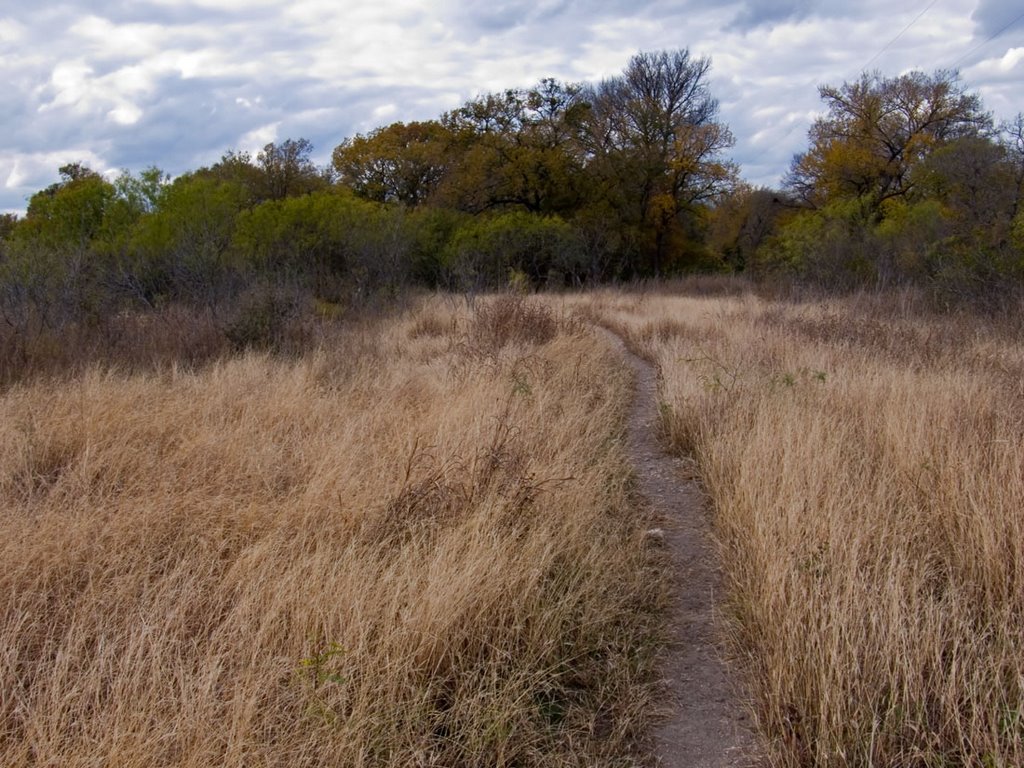
The Onion Creek Greenbelt is close by my house, and I frequently go walking and birdwatching there. I have mentioned it many times in my blog. The most striking characteristic of the photos I have put up that were taken in the Greenbelt, seems to be the near total absence of green.
Today's photos are no exception.

This is the horse trail where I frequently start my walk. The trees directly ahead conceal an arroyo.


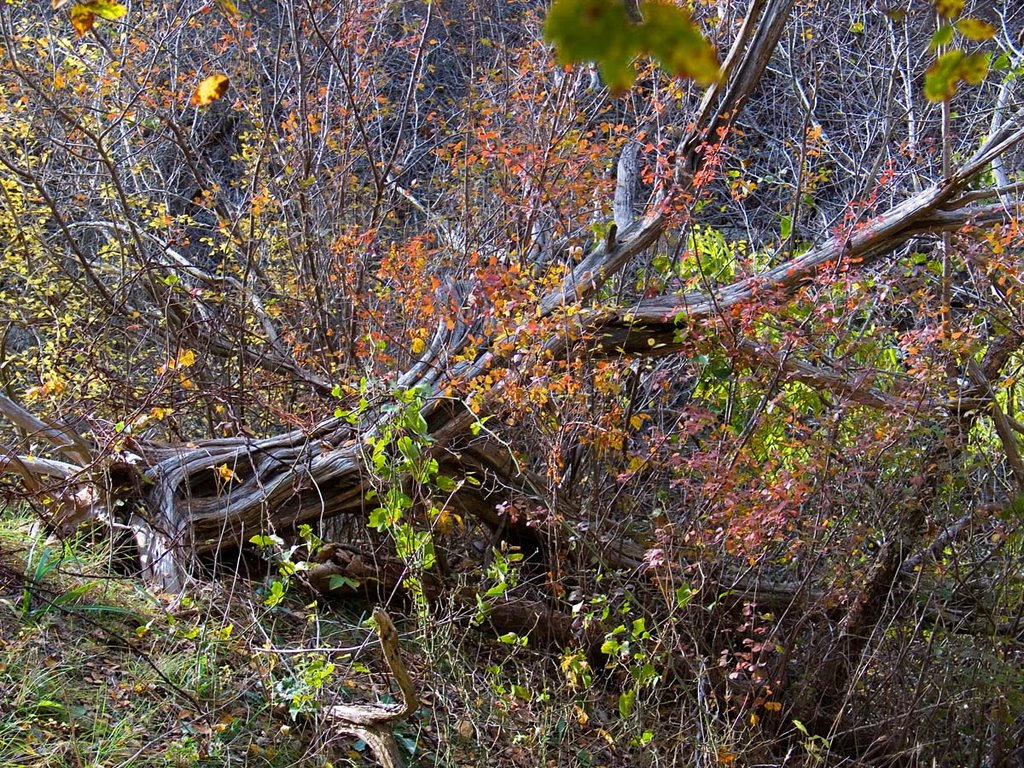
And here is a juniper tree partially fallen into that arroyo. Twisted juniper trunks sometimes make interesting photographic studies.


click on a photo to enlarge

For those of you who have may have enjoyed some of the photos on my blog, I'll mention that I have been putting up a lot of more on my Flickr page. Many of them have appeared here also, usually at somewhat lower resolution. In the future I think I'll upload some high resolution scans there from my ongoing scanning project. Flickr enables me to archive fairly good quality photos and organize them by occasion, or by subject, or by whim. It's a bit different from a blog.

I do plan to continue this blog, though as I mentioned previously, because of other projects my posts will be less frequent in the near future.

Monday, November 27, 2006

Excuses

I have been busy with various retirement-type projects, including continued scanning of old photographs--we accumulated more than I can reasonably digitize in one lifetime--plus sporadic transcription of my wife's diaries for my daughter and stepdaughter (given my typing speed and the difficulty of Kay's handwriting, I will have to live to be 104 like my grandmother to have any hope of finishing). Plus I go birdwatching and nature-photographing almost daily. All this by way of an excuse as to why I have been neglecting this blog. Sadly, the neglect will probably continue for a while, though I hope to put up an occasional photo, like the monarch butterfly, below, that I found flitting around in some dry grass yesterday, down by Onion Creek. I was surprised to see it. We still have butterflies, but I thought the monarchs were gone.

Monarch butterfly


We had a great Thanksgiving, BTW--Eve was home from grad school, and my mother drove up from New Braunfels, and we had about 20 friends over as well. I think everyone had a good time, as I did.

Monday, November 20, 2006

Monday photo miscellany

These are escaped domestic Chinese geese, Anser cygnoides, on Austin's Town Lake. Chinese geese are descended from the wild swan goose of Central Asia, which is not a swan+goose hybrid, but rather gets its name from the head, which resembles that of a swan.


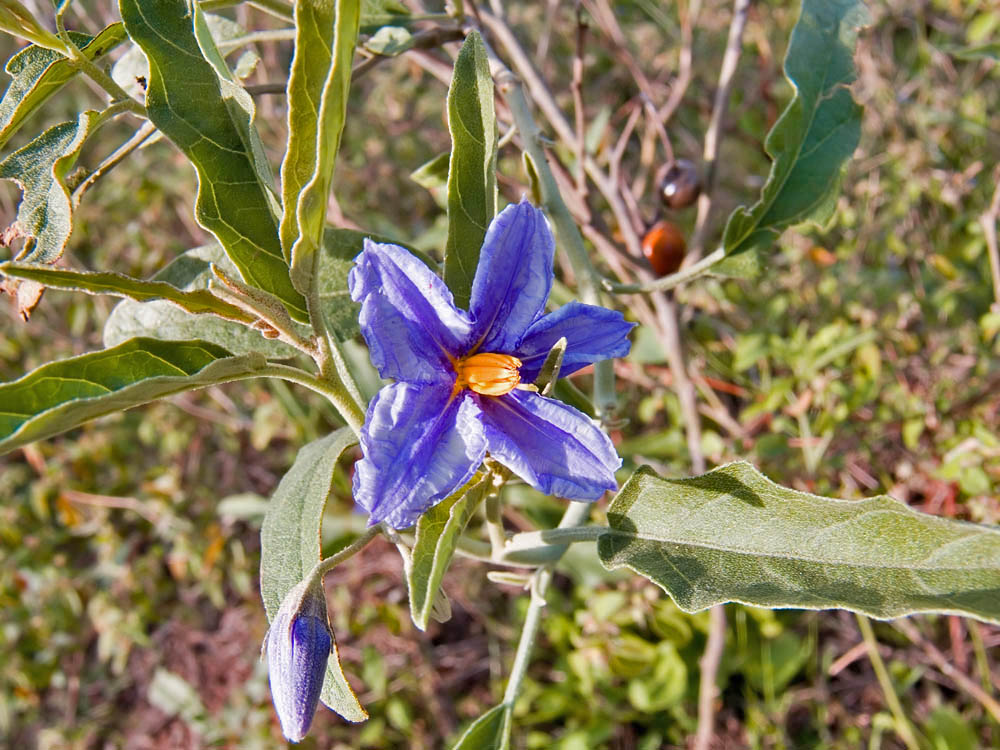
We still have a few straggling flowers in Austin. We have not yet had a killing frost, but we will soon. This is some kind of small aster, blown up larger than life size.


A nightshade species.


A robin near Onion Creek.


Another robin, a few feet away from the first. The robins are back in large numbers now.


(Click any photo for a larger view.)

Note: No more posts here till after Thanksgiving.

Friday, November 17, 2006

Friday cat blogging

Gray on the wall under the fig tree


Close-up: the stop bothering me look


click photos to enlarge

More November butterflies, and a hermit thrush

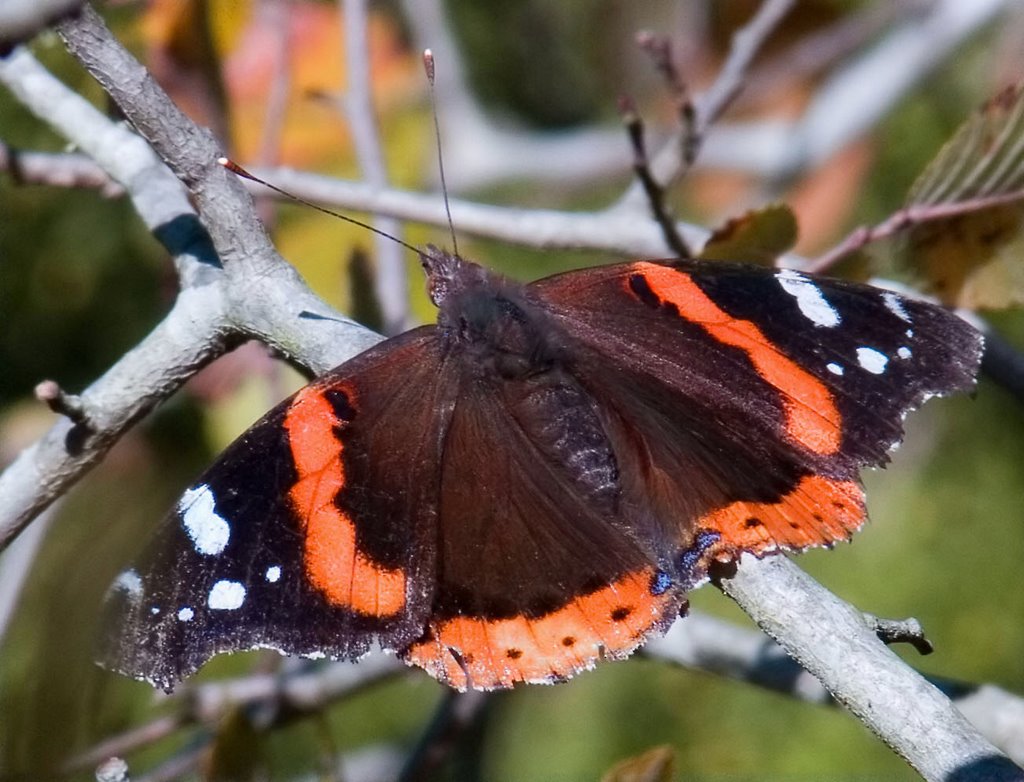
A red admiral, Vanessa atalanta, in the afternoon sun at the Onion Creek greenbelt


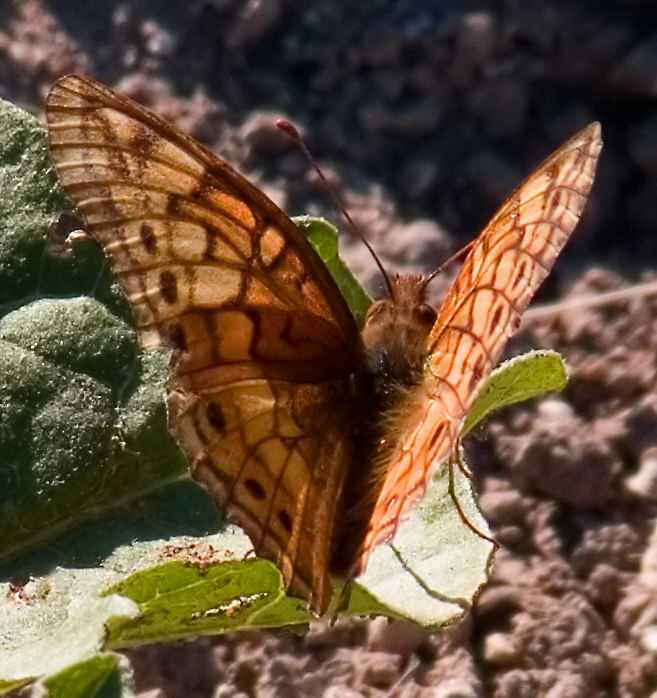
A variegated fritillary, Euptoieta claudia, also in the greenbelt


Another view of the frit


This hermit thrush was left staring warily at me, occasionally flicking its wings, after the tree full of robins I had been stealthily approaching (I should put stealthily in quotes) exploded in alarm--actually, it was three separate salvos of robins, 15 or 20 each I guess, launched about half a second apart, rocketing through half-bare November hackberry branches as I fumbled with my camera. Damn, I thought, so much for stealth. But the hermit thrush was still there, nervous, wondering what I was doing down there, but unwilling to leave.


click any photo to enlarge